Top 5 Best Electric Bikes for Commuting of 2026
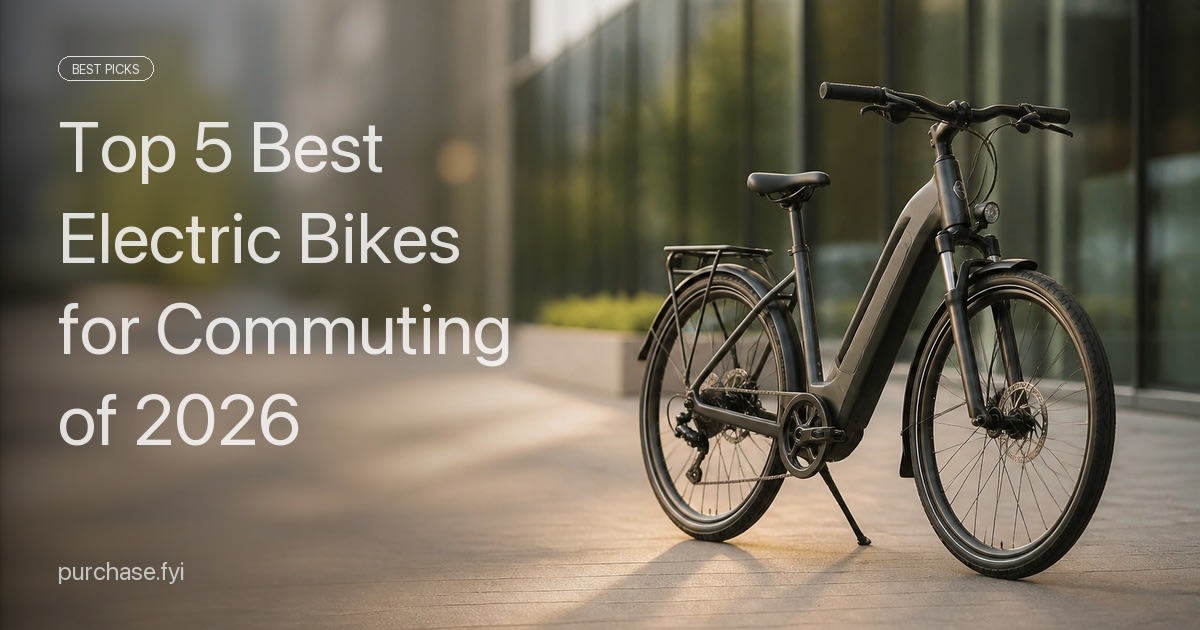
Picking a commuter e-bike is harder than it looks. The price range spans $800 to $4,000, the brands all sound convincing, and the specs only tell part of the story. After sifting through a lot of real-world commuter feedback, I landed on five bikes that actually earn their spot: the Aventon Level for most people, the Lectric XP Lite2 if price is the priority, the Ride1Up Vorsa for punishing hills, the Aventon Soltera if you want a bike that blends in, and the Velotric Discover 3 if your commute mixes pavement and trail. The Aventon Level is where I keep landing when someone asks me for a recommendation without caveats. Read on for the full breakdown.
| Product | Range And Power | Hill Climbing | Value | Comfort | Commute Readiness | |
|---|---|---|---|---|---|---|
Best OverallAventon Level | 7.5 | 7.5 | 9.0 | 8.5 | 8.5 | — |
 Best Budget PickLectric XP Lite2 | 7.5 | 6.5 | 9.5 | 7.0 | 7.5 | See PriceAmazon |
Best for Hilly CommutesRide1Up Vorsa | 8.0 | 8.5 | 8.5 | 7.5 | 7.5 | — |
Best for Blending InAventon Soltera | 6.0 | 5.5 | 8.0 | 8.0 | 8.0 | — |
Best for Trail and RoadVelotric Discover 3 | 8.5 | 8.0 | 7.5 | 8.5 | 9.0 | — |
Aventon Level
Who is this best for?
The Aventon Level is for the commuter who wants to get it right once without spending $2,800 on a Specialized. It covers a wide range of use cases: the Level 2 handles flat city commutes well, the Level 3 adds theft-deterrent features worth having in denser urban areas, and the Level 4 is built for longer, hillier routes where range matters. If your commute is under 20 miles each way and not a sustained grind uphill, this is the bike to buy before anything else.
Why we love it
The Level has earned its reputation by being a bike that works well across multiple generations of buyers, not just one well-reviewed product cycle. The step-through geometry is genuinely comfortable over longer rides, not just comfortable-sounding in the spec sheet. Compared to the Lectric XP Lite2, which folds and stores under a desk, the Level is a more stable, natural-feeling ride and handles city streets more confidently. The Level 4 extends that into hilly territory, which is where the Ride1Up Vorsa competes, though the Aventon holds its own for most riders. Hub motor efficiency is the main trade-off, but for most commutes it simply does not matter.
Should you buy it?
Yes, if you want a bike that does most things well and has enough model variation to match your route. Buy the Level 2 or 3 for a typical urban commute and the Level 4 if your route has real elevation. If your budget is under $1,000, look at the Lectric instead. If you need to fold the bike and store it at work, neither Level model works.

Who is this best for?
The Lectric XP Lite2 is for the commuter who has decided $999 is the ceiling and wants the most reliable option in that bracket, not just the cheapest. Lectric has built a genuine reputation for customer support, which is uncommon at this price. If you need to bring the bike inside at work because outdoor locking is not an option, the fold-to-36-inch footprint makes that feasible in a way the Aventon Level simply cannot match.
Why we love it
At 49 lbs and $999, the XP Lite2 undercuts the Aventon Level by several hundred dollars while still delivering hydraulic disc brakes and 80 miles of claimed range on a full charge. The 819W peak motor is sufficient for flat commutes and light grades. What separates Lectric from budget competitors at similar prices is customer support: the brand has a dealer network and responsive service, which makes the difference when a controller or display needs replacing after a year. Compared to the Ride1Up Vorsa, the XP Lite2 gives up efficiency and climbing ability in exchange for being foldable and $500 less expensive. The 20-inch wheels and single-speed chain drive are the practical compromises, not the motor.
Should you buy it?
Yes, if $999 is genuinely your ceiling and you need something that can fold and be stored indoors. The components are entry-level and the 20-inch wheels are less stable at speed than the 27.5-inch wheels on the Aventon Level, but the trade-off is real savings and a bike that fits inside. If you can stretch to $1,500 and do not need foldability, the Aventon Level is a better bike for daily use.
Ride1Up Vorsa
Who is this best for?
The Vorsa is for the commuter with a legitimately hilly route where range is the primary concern, not just occasional grades. It fits taller riders better than most alternatives in its price range, which matters for both comfort and leverage on climbs. If your commute resembles a San Francisco street with actual sustained elevation, this is where to look before the Aventon Level or anything mid-drive.
Why we love it
The Vorsa carries a larger battery than the comparable Ride1Up Prodigy v2, which directly extends its usefulness on long hilly commutes where you cannot afford to run out of charge on the return trip. Compared to the Aventon Level, it delivers similar torque for hill climbing at a price point that rewards buyers who are specifically buying for elevation, not versatility. The hub drive is less efficient than a mid-drive on steep terrain, but the larger battery compensates for that in practice. For taller riders who have been told to look at step-through frames, the Vorsa's geometry fits up to 6 feet 4 inches, a range the Lectric XP Lite2 and Aventon Soltera do not match.
Should you buy it?
Yes, if your route has real hills and range is your primary anxiety. The hub motor is a real trade-off compared to mid-drive options at higher price points, and the Vorsa does not fold or blend in. If your route is mostly flat, the Aventon Level is a more versatile choice. If you need a mid-drive feel and can spend around $1,600, look at the honorable mention Ride1Up Prodigy v2 instead.
Aventon Soltera
Who is this best for?
The Soltera is for the commuter who does not want their bike to look like an e-bike, either for aesthetic reasons or to reduce the chance of attracting attention at locking spots. The Soltera 3 adds a belt drive and IPX6 weatherproofing that make it genuinely low-maintenance for daily use in most climates. Riders on flat routes who find the Aventon Level too visibly electric will like what the Soltera offers.
Why we love it
The 350W motor and light overall weight keep the Soltera in a category that is closer to an assisted regular bike than a powered commuter. It comes with fenders and a rack included, which is not universal at this price. The belt drive option on the Soltera 3 removes the chain maintenance that frustrates most daily commuters within the first six months. Compared to the Ride1Up Vorsa, the Soltera gives up climbing ability and range for a significantly lighter, quieter, cleaner package. Compared to the Lectric XP Lite2, it is not foldable, but it handles city bike lanes far more naturally at speed.
Should you buy it?
Yes, if your commute is under 15 miles each way on terrain that stays mostly flat. The small motor is the real limitation here: do not buy this bike if you have hills. If your route has any sustained grades, the Aventon Level or Ride1Up Vorsa will serve you better. If low visibility is your top priority but your route has hills, the Specialized Turbo Vado in the honorable mentions is worth the premium.
Velotric Discover 3
Who is this best for?
The Velotric Discover 3 is for the commuter who wants a single bike that functions well on the daily ride to work and on a weekend trail without switching bikes. The 750W motor with 75Nm of torque handles both environments, and the front air suspension absorbs trail imperfections in a way that springs do not. If you are comparing it to the Aventon Soltera on the basis of versatility, the Discover 3 is in a different category entirely.
Why we love it
The built-in turn signals, brake light, and cruise control are features usually reserved for bikes at significantly higher price points. The front air suspension is a meaningful upgrade over spring forks, particularly on dirt paths and cracked city pavement. At 750W with 75Nm of torque, the Discover 3 has more power on tap than the Aventon Level and far more than the Aventon Soltera. The IPX water resistance and two-year warranty give daily commuters the confidence to ride in variable weather without babying the bike. Compared to the Ride1Up Vorsa, the Discover 3 adds trail capability and integrated safety features at a similar price tier.
Should you buy it?
Yes, if you want one bike that genuinely covers commuting and trail riding without major compromises. The trade-off is weight: a motor and suspension package this capable is not a light bike. If your commute is purely urban and flat, and you do not plan to ride trails, the Aventon Soltera or Aventon Level are more focused choices. If budget is the constraint, the Lectric XP Lite2 handles commuting at half the price.
Honorable Mentions
Specialized Turbo Vado SL
The Turbo Vado SL is notably lighter than most e-bikes in its class and rides closer to a regular bicycle than anything else on this list. The EQ model comes with rack, fenders, and always-on lights. The price, often $2,800 and above, is the barrier.
Ride1Up Prodigy v2
The Prodigy v2's mid-drive motor gives it the most natural feel on hills and dirt, handling grades in a way hub-drive bikes cannot match. The fit caps out around 6 feet 1 inch and the 500Wh battery is smaller than competitors like the Vorsa, which limits its appeal for taller riders or longer commutes.
Gazelle
Gazelle has been building commuter bikes for over a century, and it shows in the component quality and frame geometry of models like the Arroyo and Avignon. The Bosch mid-drive motor system is one of the most trusted in the category. Buy used if the new price is out of range.





Comments
No comments yet. Be the first to leave one.